Operation TRASHI-I: How a 326-Day Counter-Terror Mission Redefined India’s Fight Against Terrorism
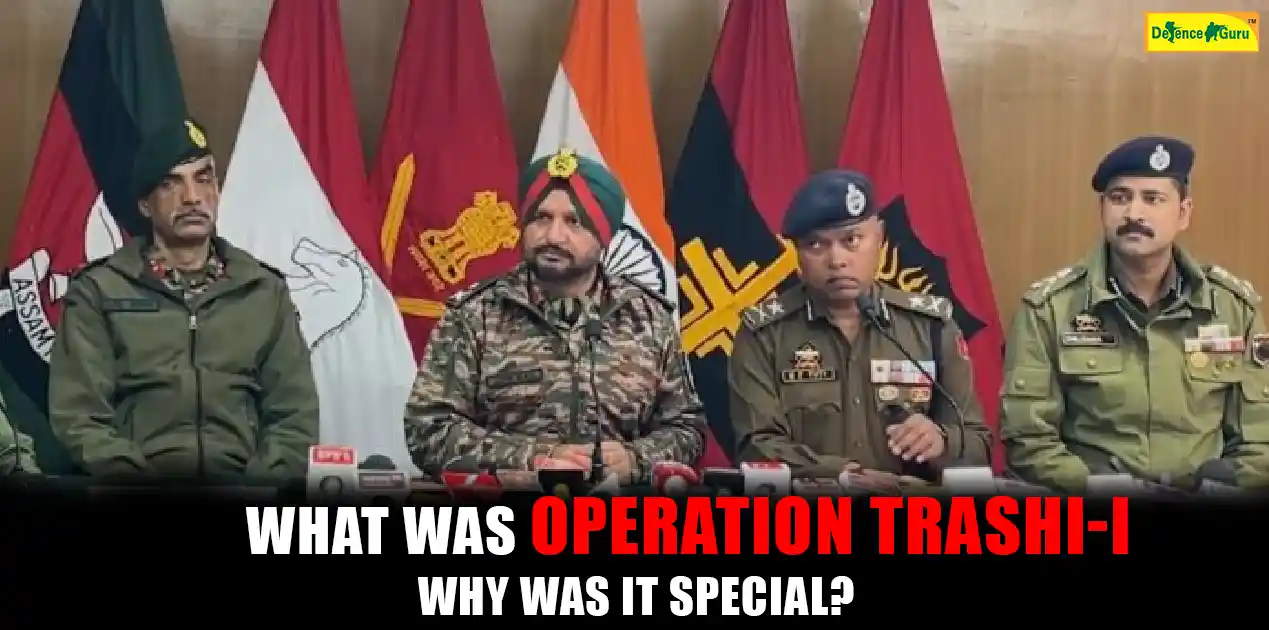
Operation TRASHI-I wasn’t a loud, headline-chasing strike. It was quiet. Patient. Relentless. And when it finally ended on February 22, 2026, it left behind a powerful message: India’s counter-terrorism grid has matured into a force that can outwait, outthink, and outmaneuver its enemies—no matter how long it takes.
Conducted in the rugged Kishtwar district of Jammu and Kashmir, this nearly year-long operation neutralized seven terrorists of the Pakistan-based Jaish-e-Mohammed (JeM), including senior commander Saifullah. More importantly, it showcased how intelligence, technology, endurance, and coordination can come together to produce surgical success—without sacrificing a single Indian life.
Let’s break down why Operation TRASHI-I stands apart and why it will be studied for years to come.
Background: Why Kishtwar Became the Focus
A Region That Tests Every Soldier
Kishtwar isn’t just another district on the map. It’s a maze of dense forests, steep ridgelines, deep gorges, and high-altitude hideouts—perfect terrain for terrorists trying to disappear. Weather here isn’t friendly either. Rain, snow, and freezing nights are routine, not exceptions.
For counter-terror forces, this means one thing: no shortcuts.
Intelligence Triggers the Operation
Specific, credible intelligence inputs pointed to the presence of foreign terrorists who had infiltrated deep into the upper reaches of Kishtwar. These weren’t local foot soldiers. They were trained operatives sent to revive terror networks in the Chenab Valley region.
That intelligence set the wheels in motion.
Launch of Operation TRASHI-I
Leadership by the White Knight Corps
The operation was spearheaded by the Indian Army’s White Knight Corps, also known as 16 Corps—a formation responsible for counter-insurgency and LoC security across Rajouri, Poonch, Doda, Ramban, and Kishtwar.
Part of a Larger Security Framework
Operation TRASHI-I was conducted under the umbrella of Operation Rakshak, India’s long-running counter-insurgency initiative in Jammu and Kashmir. This ensured access to resources, intelligence fusion, and inter-agency coordination from day one.
Agencies Involved: A True Joint Effort
Indian Army
Ground dominance, planning, execution, and sustained presence in hostile terrain formed the Army’s core role.
Jammu and Kashmir Police
Local intelligence, human inputs, and terrain familiarity played a crucial supporting role.
Central Reserve Police Force
The Central Reserve Police Force (CRPF) provided area domination, outer cordons, and logistics security—ensuring terrorists had nowhere to escape.
This wasn’t parallel work. It was integrated warfare.
Technology as a Force Multiplier
Eyes in the Sky
Operation TRASHI-I made extensive use of:
-
Unmanned Aerial Vehicles (UAVs)
-
First-Person View (FPV) drones
-
Satellite imagery
-
Thermal surveillance equipment
These tools helped track movement, identify hideouts, and monitor escape routes in real time.
Intelligence-Driven Warfare
Instead of random search operations, every movement was backed by layered intelligence—signals, human sources, and technical surveillance working together like pieces of a puzzle.
Course of the Operation: Slow, Steady, and Surgical
Cordon and Search—Done Right
Security forces sealed off likely exit routes and conducted methodical combing of forested slopes. No rush. No noise. Just patience.
Endurance Over Aggression
Over 326 days, troops operated in isolation, often cut off from regular supplies. This wasn’t about quick wins—it was about outlasting the enemy.
Six Encounters in 40 Days
The operation’s most intense phase saw six separate encounters within a 40-day window, gradually shrinking the terrorist module.
Role of Elite Units
11 Rashtriya Rifles
Specialists in counter-insurgency, the 11 RR played a central role in tracking and engaging terrorists in close-quarter forest combat.
2 Para Special Forces
Precision strikes, stealth movement, and high-risk operations were handled by 2 Para SF, especially in the final phases.
These units brought experience that can’t be taught in manuals—it’s earned in the field.
The K9 Hero: Army Dog Tyson
A Game-Changing Detection
A trained K9 named Tyson detected militant presence during a critical encounter. Despite sustaining injuries, Tyson’s actions directly contributed to neutralizing terrorists.
Airlifted and Saved
Tyson was immediately evacuated for treatment—highlighting how the Indian Army treats its four-legged warriors as family, not expendable assets.
The Final Encounter: February 22, 2026
Chatroo Area Showdown
The operation concluded in the Chatroo area of Kishtwar, where three terrorists opened fire from a mud-house hideout.
Recovered Arsenal
Security forces recovered:
-
Two AK-47 rifles
-
Ammunition
-
Other war-like stores
The identities were confirmed as part of the same JeM module that had been tracked for months.
Key Achievements of Operation TRASHI-I
Complete Neutralization
All seven JeM terrorists were eliminated. No survivors. No escape.
Zero Casualties
Perhaps the most remarkable aspect: not a single Indian soldier or policeman was lost.
High-Value Target Eliminated
The death of Saifullah, a key JeM commander, dealt a significant blow to Pakistan-based terror planning in the region.
Why Operation TRASHI-I Was So Special
Unmatched Duration
Few counter-terror operations globally last nearly a year without losing momentum. TRASHI-I did—and succeeded.
Terrain and Weather Challenges
Dense forests, snow, rain, and altitude made this a logistical nightmare. Yet, operations continued seamlessly.
Technology + Tradition
Modern surveillance blended with classic soldiering skills—tracking, patience, and ground intelligence.
Morale and the Human Element
“Bajrangbali Ki Jai”
When the operation ended, soldiers raised chants of “Bajrangbali Ki Jai”—a raw, emotional release after months of tension. It wasn’t about celebration. It was about relief, pride, and unity.
Strategic Impact on Counter-Terrorism
Disrupting Infiltration Models
TRASHI-I showed that deep-forest hideouts are no longer safe—even months after infiltration.
Message to Terror Networks
India is willing to wait. And it will not stop until the job is finished.
Lessons for Future Operations
Patience Wins Wars
Quick operations grab headlines. Long ones dismantle networks.
Jointness Is Non-Negotiable
Army, police, and paramilitary working as one is now the gold standard.
Technology Must Serve Strategy
Gadgets don’t replace soldiers—but they make soldiers smarter.
Operation TRASHI-I in the Larger Security Narrative
In the broader context of Jammu and Kashmir’s security landscape, Operation TRASHI-I stands as a textbook example of modern counter-terrorism—measured, intelligence-led, and casualty-free.
It didn’t just neutralize terrorists. It redefined how India hunts them.
Conclusion
Operation TRASHI-I was more than a mission—it was a statement. A statement that India’s security forces possess the discipline to wait, the courage to endure, and the precision to strike when the moment is right. By eliminating an entire JeM module without a single casualty, the operation set a new benchmark in professionalism and operational resilience.
In an era of persistent threats, TRASHI-I proves one thing beyond doubt: India’s counter-terrorism capability isn’t just reactive—it’s strategic, patient, and relentless.
Frequently Asked Questions (FAQs)
1. What was Operation TRASHI-I?
Operation TRASHI-I was a 326-day counter-terrorism operation in Kishtwar, Jammu and Kashmir, aimed at eliminating JeM terrorists hiding in forested terrain.
2. Who led Operation TRASHI-I?
The operation was led by the Indian Army’s White Knight Corps (16 Corps) with support from J&K Police and CRPF.
3. How many terrorists were neutralized?
Seven terrorists affiliated with Jaish-e-Mohammed, including commander Saifullah, were eliminated.
4. Why is Operation TRASHI-I considered special?
Its duration, zero casualties, use of advanced technology, and complete dismantling of a terror module make it exceptional.
5. What impact did it have on India’s counter-terror strategy?
It reinforced intelligence-driven, joint, and patient operations as the future of counter-terrorism in India.
Read more:
Indian Navy Assumes First-Ever Command of Combined Task Force 154