India Strengthens Sea-Based Nuclear Power with Successful K-4 Missile Test
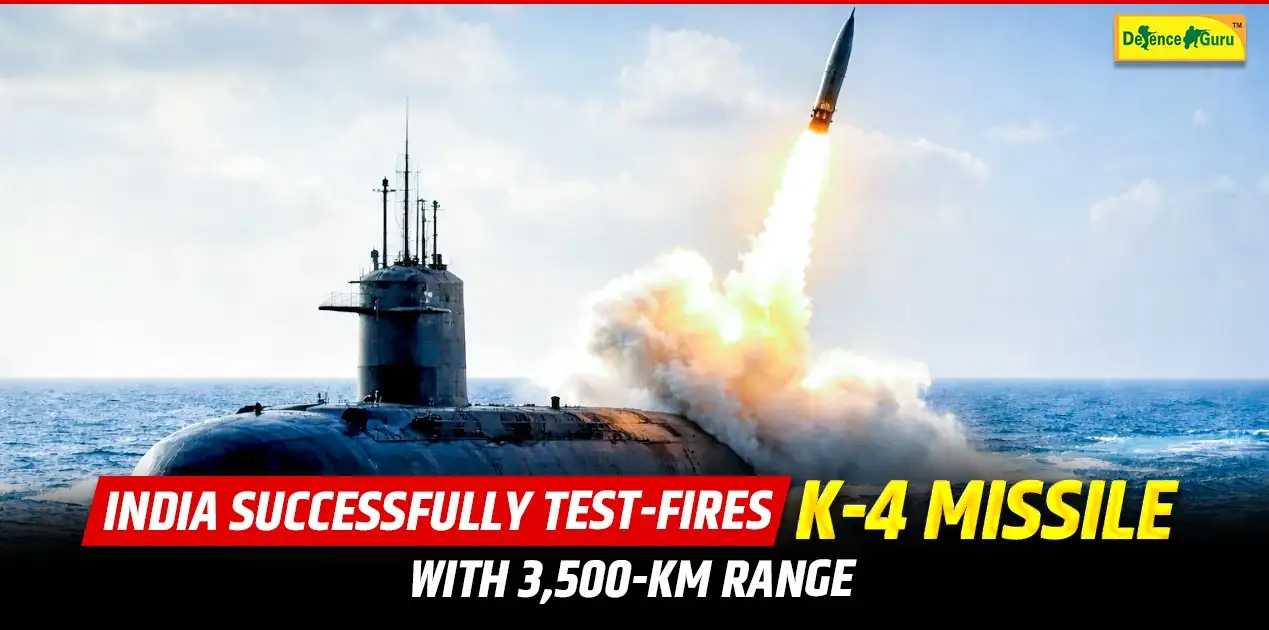
India has achieved a major strategic breakthrough with the successful test of the K-4 submarine-launched ballistic missile (SLBM), significantly reinforcing its sea-based nuclear deterrence. The missile was launched from the nuclear-powered submarine INS Arighaat in the Bay of Bengal, near Visakhapatnam.
With an operational range of nearly 3,500 km, the K-4 adds depth and credibility to India’s undersea strike capability. This successful trial strengthens the final and most concealed arm of India’s nuclear triad, enabling nuclear response capabilities from land, air, and sea.
Inducted into the Indian Navy in August 2024, the K-4 places India among a limited group of nations possessing fully operational submarine-launched nuclear missile systems. The missile can carry a nuclear payload weighing up to 2.5 tonnes and is compatible with Arihant-class nuclear submarines, enhancing long-range deterrence patrols.
Adapted from the Agni-III ballistic missile, the K-4 has been specifically engineered for underwater launches. It is designed to eject from a submerged submarine, break through the ocean surface, and then ignite its rocket engine mid-flight—an advanced technological feat mastered by only a few countries worldwide.
Defence analysts consider the K-4 the most discreet pillar of India’s nuclear deterrence framework. Nuclear-armed submarines operate silently across vast ocean regions, remaining undetected for extended durations and ensuring a reliable second-strike capability.
Named after Dr A P J Abdul Kalam, the K-series of missiles honours his foundational contribution to India’s missile development programmes. The successful K-4 test reflects India’s advancing indigenous defence technology, strategic restraint, and commitment to maintaining credible minimum deterrence in a rapidly evolving regional security landscape.
Read more:
DRDO Successfully Completes User Evaluation Trials of Akash-NG