
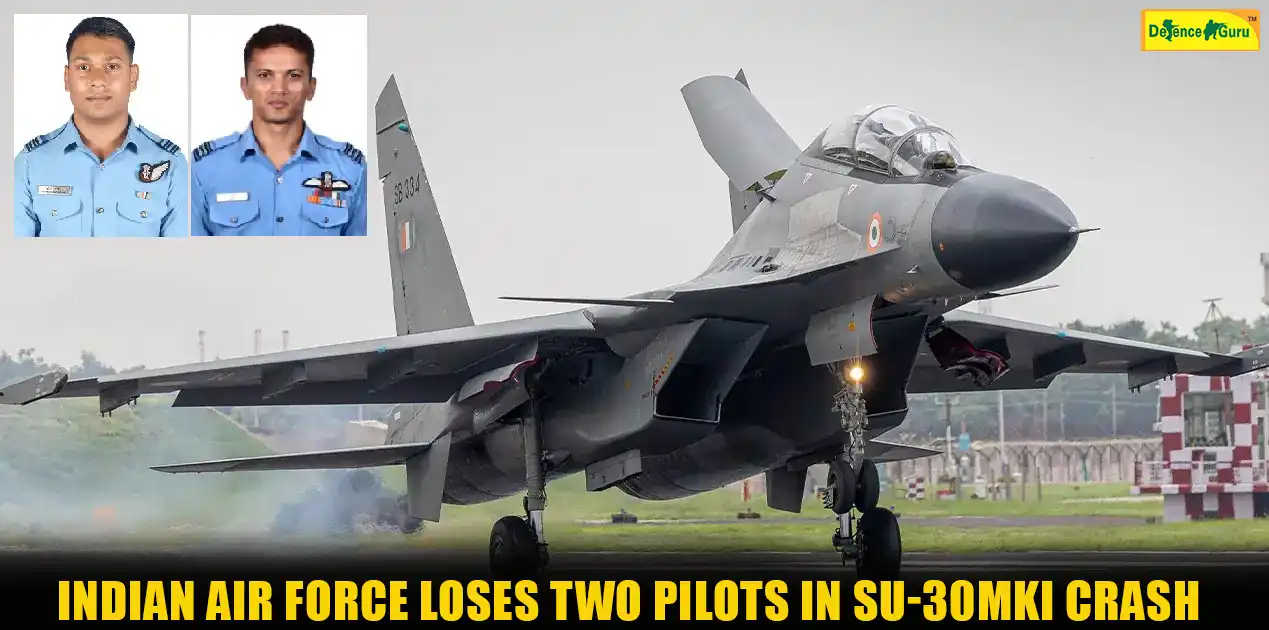
Tragic Su-30MKI Fighter Jet Crash in Assam: Loss of Two Indian Air Force Pilots
Military aviation represents one of the most demanding and high-risk professions in the world. Every flight involves complex machinery, extreme speeds, and split-second decisions that can mean the difference between life and death. The tragic crash of an Indian Air Force (IAF) Su-30MKI fighter aircraft in Assam serves as a painful reminder of these risks and the extraordinary courage of the men and women who operate these machines.
On Thursday evening, a Su-30MKI fighter jet operating from the Jorhat Air Force Station failed to return from a routine training mission. The aircraft had taken off earlier in the evening as part of standard operational exercises conducted regularly by the Indian Air Force to maintain pilot readiness and combat proficiency. Training missions like these are crucial because they simulate real-world combat scenarios, navigation challenges, and emergency procedures.
At approximately 7:42 PM, ground control reportedly lost communication with the aircraft. In military aviation, losing contact with a fighter jet immediately triggers serious concern. Aircraft are equipped with multiple communication systems and tracking technologies, so a sudden silence usually indicates a significant technical issue or an emergency situation.
Once the aircraft was declared overdue, the Indian Air Force initiated emergency protocols. Search and rescue teams were quickly mobilized, and surveillance efforts began to locate the missing jet. Shortly afterward, reports emerged that the aircraft had crashed in the hilly terrain of Karbi Anglong, roughly 60 kilometers from Jorhat.
Tragically, the crash resulted in the loss of two brave fighter pilots: Squadron Leader Anuj and Flight Lieutenant Purvesh Duragkar. Both officers sustained fatal injuries during the accident. The Indian Air Force released an official statement expressing deep sorrow and solidarity with the families of the fallen pilots.
Moments like these ripple through the entire defense community. Fighter pilots train for years to master aircraft like the Su-30MKI, and every mission carries the responsibility of protecting national airspace. When a tragedy occurs, it reminds the nation not only of the dangers of military service but also of the immense dedication required to defend the skies.
Timeline of the Training Mission and Loss of Contact
Reconstructing the timeline of a military aviation accident is one of the first steps investigators take after such incidents. Even small details—like the exact moment communication stopped or the last known altitude of the aircraft—can provide crucial clues about what might have gone wrong.
The Su-30MKI fighter jet took off from the Jorhat Air Force Station in Assam for what was described as a routine training sortie. These missions typically involve a range of exercises, including navigation drills, simulated combat maneuvers, radar operations, and emergency handling training. For fighter pilots, training flights are not simply practice—they are essential to maintaining operational readiness in one of the most complex combat environments imaginable.
During the early phase of the mission, communication between the aircraft and ground control appeared normal. Pilots regularly exchange updates regarding their position, altitude, and mission progress. However, at approximately 7:42 PM, the aircraft made what would become its last known contact with ground control.
After this point, radio silence followed.
When air traffic controllers are unable to reach a military aircraft, they follow a structured escalation procedure. Initial attempts include contacting the aircraft through alternate frequencies or relay aircraft operating in the same airspace. If those efforts fail, the aircraft is classified as “communication lost” or “overdue.”
That is exactly what happened in this case.
Within minutes of the lost communication, emergency response procedures were activated. Radar tracking data was analyzed to determine the jet’s last known trajectory. Military authorities began coordinating with local administrative and security agencies to prepare for a possible search operation.
Soon afterward, reports indicated that the aircraft may have gone down in the Karbi Anglong district, a region known for its rugged hills and dense forest cover. Such terrain complicates search operations because wreckage can be scattered across steep slopes or hidden beneath thick vegetation.
As rescue teams moved toward the suspected crash site, the worst fears were confirmed. The aircraft had crashed, resulting in the tragic loss of both pilots on board.
Understanding the timeline is critical because it helps investigators identify whether the cause was mechanical failure, spatial disorientation, weather factors, or other operational challenges. Every minute leading up to the crash becomes a vital piece of the puzzle.
Crash Location in the Hilly Terrain of Karbi Anglong
The Karbi Anglong district in Assam is one of the most geographically complex regions in northeastern India. Characterized by rolling hills, thick forests, and remote settlements, the area presents both natural beauty and significant logistical challenges—especially during emergency operations such as aircraft crash recovery.
The Su-30MKI fighter jet reportedly crashed in this rugged terrain approximately 60 kilometers from Jorhat, where the aircraft had originally taken off. For search teams, reaching such locations quickly can be extremely difficult. Unlike crashes in open plains or near urban areas, accidents in hilly regions often require a combination of ground teams, helicopters, and specialized rescue units.
When the aircraft was declared missing, security forces, local authorities, and rescue personnel were deployed immediately. The goal in such situations is twofold: locate the crash site as quickly as possible and determine whether the crew survived the impact.
The geography of Karbi Anglong complicates both objectives.
Dense vegetation can obscure wreckage from aerial surveillance, while steep slopes and narrow forest paths slow down ground rescue teams. In some cases, search units must trek several kilometers through forested terrain before reaching the exact location of the crash.
Despite these obstacles, rescue teams managed to locate the wreckage of the aircraft. Unfortunately, the accident proved fatal for both pilots on board.
For investigators, the crash location itself can provide valuable clues. The angle of impact, debris distribution, and condition of the wreckage can reveal whether the aircraft experienced a mid-air malfunction, structural failure, or controlled flight into terrain. Even the surrounding environment—such as trees that may have been clipped by the aircraft—can help reconstruct the final seconds before impact.
Regions like Karbi Anglong also highlight the unique operational environment faced by the Indian Air Force. Northeastern India includes mountain ranges, unpredictable weather patterns, and limited infrastructure, making aviation missions both challenging and strategically important.
When fighter pilots train over such terrain, they are preparing for real-world operational scenarios where geography itself can become a tactical factor. The tragedy in Karbi Anglong underscores how unforgiving that environment can be—even for highly trained professionals flying one of the world’s most advanced fighter aircraft.
Read more:
INS Tarangini Arrives at Trincomalee, Sri Lanka
VayuShakti 2026: The Unmatched Power of India’s Air Dominance