
India’s Defence Horizon Turns Solar with Army’s MAPSS Drone Induction
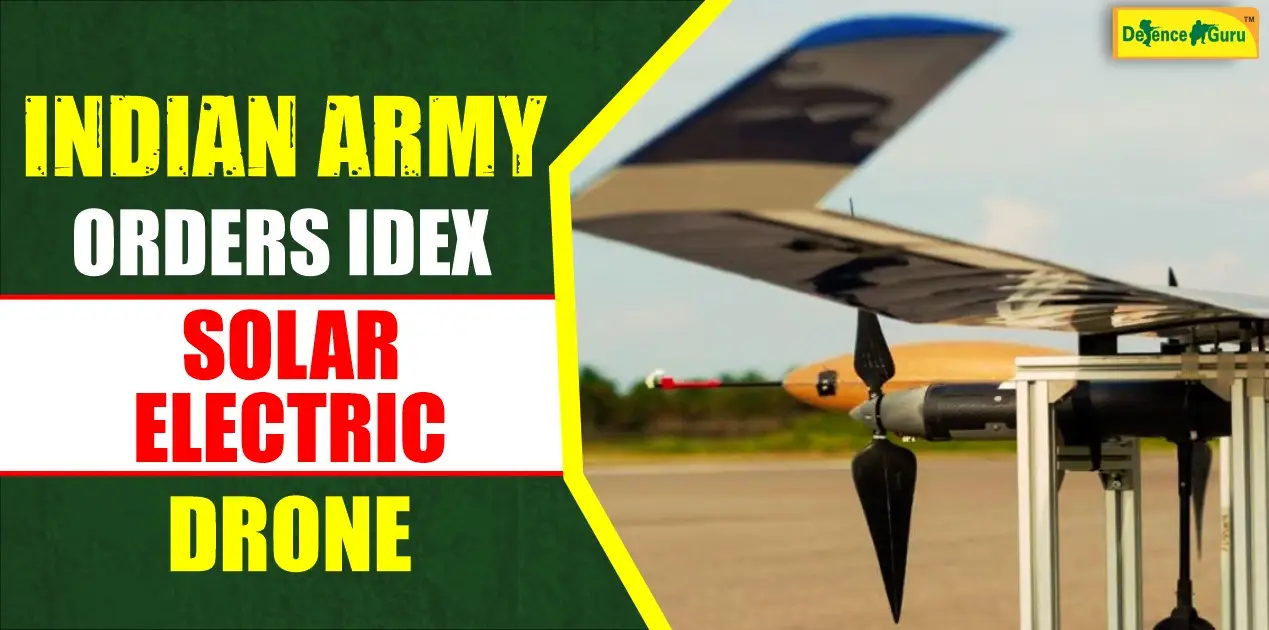
India’s defence skies are getting smarter - and greener. In a landmark move for unmanned warfare and indigenous innovation, the Indian Army has approved a ₹168 crore procurement of a solar-electric, fully autonomous surveillance UAV, marking the first-ever operational induction of solar-powered drones into the armed forces.
The platform, called the Medium Altitude Persistent Surveillance System (MAPSS), has been developed by Bengaluru-based NewSpace Research & Technologies (NRT) under the Ministry of Defence’s iDEX (Innovations for Defence Excellence) initiative. This induction signals a clear shift from conventional battery-driven and tethered drones to long-endurance, self-sustaining aerial systems.
Always Watching, Powered by the Sun
Designed for medium-altitude, long-duration missions, MAPSS is built to deliver uninterrupted intelligence, surveillance and reconnaissance (ISR) across India’s most challenging terrains—icy Himalayan frontiers, vast desert stretches, and remote border zones.
Its solar-electric propulsion system allows the UAV to stay airborne for extended periods without frequent recovery or refuelling, drastically reducing logistical strain in forward and inaccessible areas.
According to defence sources, MAPSS will support:
- Continuous border surveillance and ISR
- Electronic intelligence (ELINT) collection
- Communication relay in low-connectivity regions
- Artillery observation and battlefield overwatch
The electric propulsion also ensures low acoustic and thermal signatures, making the platform significantly harder to detect.
From High-Altitude Research to Battlefield Reality
MAPSS is an operational evolution of NRT’s High Altitude Pseudo Satellite (HAPS) programme, which has already set national benchmarks in endurance and altitude. During trials at the Aeronautical Test Range, Chitradurga, the solar UAV achieved 24–27 hour flights above 26,000 feet, even under reduced sunlight conditions.
Building on these results, the system was re-engineered for medium-altitude roles and successfully validated in Army operational zones, paving the way for its induction.
Unmanned Momentum After Operation Sindoor
The procurement reflects the Army’s accelerating embrace of unmanned systems following Operation Sindoor. In its aftermath, the force has inducted loitering munitions, kamikaze drones and surveillance platforms worth over ₹5,000 crore, all sourced from Indian manufacturers.
Further momentum is building. The Defence Acquisition Council cleared nearly ₹3,000 crore in additional drone acquisitions in late 2025, while a ₹20,000 crore fast-track unmanned procurement plan is expected to roll out in 2026.
Why MAPSS Matters Strategically
Defence planners view MAPSS as a force multiplier that complements existing MALE-class UAVs, enabling networked ISR at forward formations without deploying high-signature or manned assets. It strengthens real-time situational awareness while maintaining operational discretion.
Equally important, the induction underlines the growing role of Indian startups in defence modernisation, with iDEX emerging as a critical bridge between innovation labs and battlefield deployment.
The Bigger Picture
As global militaries race toward autonomous and sustainable systems, India’s move to field solar-powered, persistent surveillance UAVs marks a decisive step into the future of warfare. It blends technology, endurance and self-reliance—tightening border security while reinforcing the vision of Atmanirbhar Bharat in defence.
Read more:
Indian Navy to Commission 19 Warships in 2026
78th Army Day Parade: Jaipur Gears Up for a Historic First, Here’s How You Can Be Part of It