From Guardians of Merit to Allegations of Corruption: How a Recruitment Scam Shook Military Selection
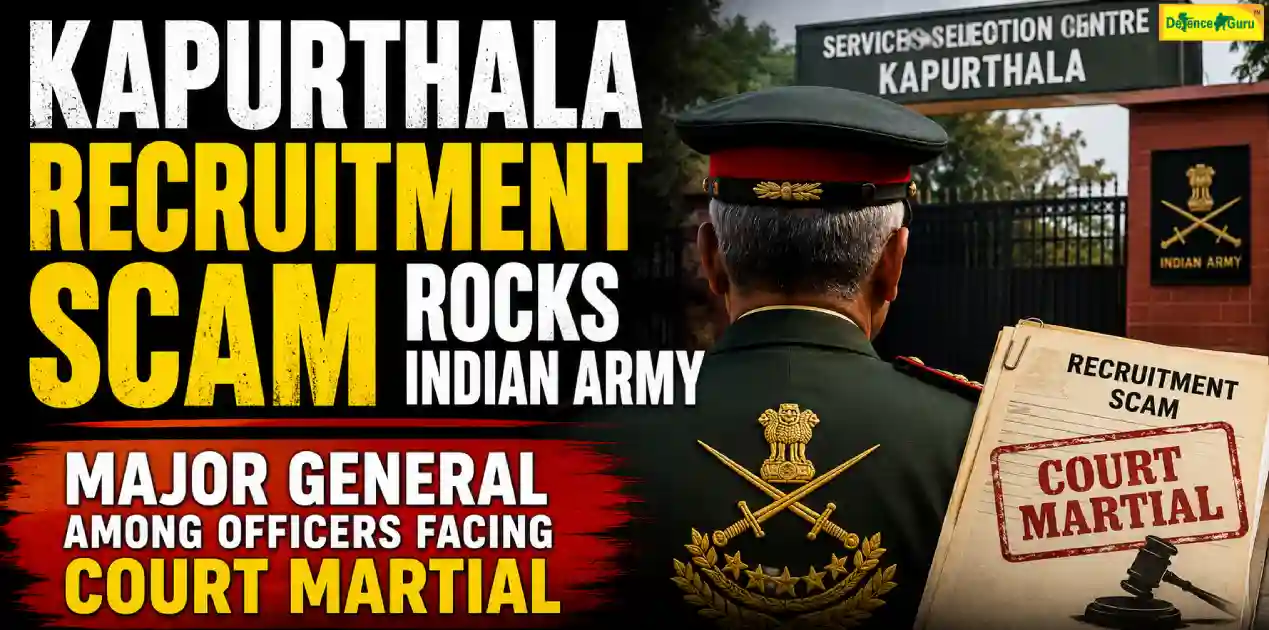
The Indian Army's reputation for discipline, integrity, and merit-based selection has come under intense scrutiny following revelations of a recruitment scam allegedly operating within the Service Selection Centre (SSC), Kapurthala. In a development that has sent shockwaves across military circles, a serving Major General and several other officers are now facing disciplinary proceedings and possible court-martial over accusations of accepting bribes to facilitate the selection of officer candidates.
The case is not merely about corruption; it strikes at the very heart of a system responsible for selecting future leaders of the armed forces.
What Is the Kapurthala Recruitment Scam?
According to investigations conducted by the Central Bureau of Investigation (CBI), a network of Army personnel allegedly accepted illegal payments ranging from Rs 50,000 to Rs 10 lakh from candidates seeking entry into the armed forces.
The alleged modus operandi revolved around candidates who had initially been declared temporarily unfit on medical grounds. Instead of undergoing the legitimate review process, these candidates allegedly helped to clear the Review Medical Board through fraudulent means after paying hefty sums.
Investigators suspect that insiders exploited sensitive recruitment data, identifying vulnerable candidates who were desperate for a second chance and willing to pay for favorable outcomes.
Major General Under Scanner
Perhaps the most startling aspect of the case is the involvement of a senior-ranking officer.
Sources indicate that the Major General who headed the Service Selection Centre, Kapurthala, has been booked under Section 123 of the Army Act, a provision that allows the Army to initiate proceedings even after an officer retires.
The timing is significant. The section was reportedly invoked on the officer's final day in service, ensuring that retirement would not shield him from military justice.
This sends a strong message that accountability within the armed forces does not end with retirement.
Army's Internal Vigilance Triggered the Probe
Unlike many corruption cases that emerge through external complaints, this investigation appears to have originated from within the military establishment itself.
An initial inquiry conducted by Military Intelligence reportedly uncovered indications that certain officers were accepting illegal gratification during the officer selection process.
Following preliminary findings, the Army Headquarters' Additional Directorate General of Discipline and Vigilance approached the CBI in 2021 for a comprehensive investigation.
This demonstrates that internal oversight mechanisms were functioning and that the Army leadership was willing to seek independent scrutiny when serious allegations surfaced.
Nationwide Investigation Uncovers Wider Network
The scale of the probe highlights the seriousness of the allegations.
The CBI conducted searches at nearly 30 locations across India, including:
- Delhi
- Kapurthala
- Bathinda
- Kaithal
- Palwal
- Lucknow
- Bareilly
- Gorakhpur
- Jaipur
- Guwahati
- Jorhat
- Visakhapatnam
The agency's FIR reportedly names 23 individuals, including serving and retired Army officers.
Additionally, around 20 officers have been attached to various military formations while disciplinary proceedings continue, indicating that investigators believe the network may have extended beyond a few isolated individuals.
The Bigger Concern: Compromising Merit in Officer Selection
The controversy extends beyond financial corruption.
Military officer selection is one of the most rigorous and carefully monitored recruitment systems in the country. Every candidate who enters the officer cadre is expected to meet stringent standards of physical fitness, medical eligibility, leadership potential, and psychological suitability.
If candidates can bypass these standards through bribery, the consequences could be far-reaching:
1. National Security Risks
Officers lead troops in combat and critical operations. Compromising selection standards could affect operational effectiveness and decision-making during missions.
2. Loss of Trust Among Aspirants
Lakhs of young Indians prepare honestly for NDA, CDS, AFCAT, TES, and other officer-entry examinations. Any perception that money can influence selection damages confidence in the system.
3. Demoralisation of Deserving Candidates
Every fraudulent selection potentially displaces a deserving candidate who earned their place through merit and hard work.
4. Damage to Institutional Credibility
The armed forces enjoy a high level of public trust. Recruitment-related scandals can create reputational challenges for an institution built on honor and integrity.
Why Section 123 Matters
The Army's decision to invoke Section 123 is particularly noteworthy.
In many corruption cases, retirement can complicate disciplinary action. However, this provision ensures that personnel cannot escape accountability simply by leaving service before proceedings begin.
The move reflects the Army's determination to pursue the case to its logical conclusion regardless of rank or retirement status.
A Test of Military Accountability
The Kapurthala recruitment scam has become more than a corruption investigation; it is now a test of institutional accountability.
The involvement of senior officers raises difficult questions about oversight and transparency within recruitment mechanisms. At the same time, the Army's willingness to initiate investigations, collaborate with the CBI, and proceed against officers of high rank demonstrates a commitment to protecting the integrity of the system.
As court martial proceedings move forward and investigations continue, the outcome of this case will likely influence future reforms in military recruitment and vigilance mechanisms.
Conclusion
The allegations emerging from the Service Selection Centre, Kapurthala, represent one of the most serious recruitment-related controversies to affect the Indian Army in recent years. While the accused officers will have the opportunity to defend themselves through due legal and military processes, the case has already sparked an important national conversation about transparency, meritocracy, and accountability in defence recruitment.
For thousands of young aspirants who dream of wearing the uniform, the message remains clear: the strength of the armed forces depends not only on military power but also on the fairness and integrity of the system that selects its future leaders.
Read more:
NDA 150th Course Passing Out Parade: 353 Future Officers March Towards Glory
Admiral Krishna Swaminathan Takes Charge as India’s New Navy Chief