Lt Gen Dhiraj Seth Set to Become Vice Chief of the Army Staff
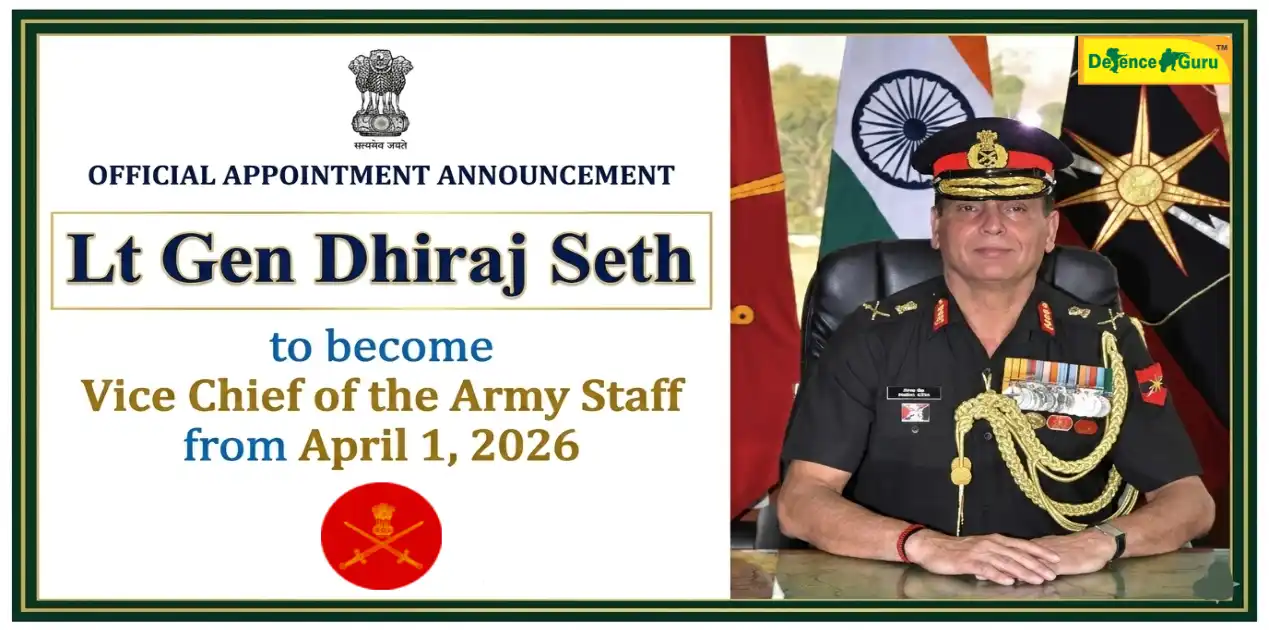
A noteworthy shift is approaching within the senior hierarchy of the Indian Army as Lt Gen Dhiraj Seth prepares to step into the role of Vice Chief of the Army Staff. The impending change is more than a routine appointment—it represents a strategic recalibration designed to preserve institutional continuity, reinforce operational vigilance, and sustain decisive leadership during a period marked by complex regional security currents.
Lieutenant General Dhiraj Seth presently serves as the General Officer Commanding-in-Chief (GOC-in-C) of the Indian Army’s Southern Command. From April 1, 2026, he will assume the influential office of Vice Chief of the Army Staff (VCOAS) at Army Headquarters in New Delhi. This elevation forms part of a broader reshuffle involving several senior three-star officers across key operational commands, a process that periodically refreshes the Army’s top-tier leadership.
The appointment places Lt Gen Seth in one of the most consequential positions within the Army’s command architecture. As Vice Chief, he will stand immediately below the Chief of the Army Staff in the chain of command. The office demands careful stewardship over operational preparedness, modernization drives, strategic doctrine, and coordination among multiple commands dispersed across the nation.
Lt Gen Seth currently oversees Southern Command from its headquarters in Pune—one of the Army’s largest geographical commands. The formation supervises military infrastructure and operational responsibilities across the peninsular region of India. Beyond territorial oversight, Southern Command plays a pivotal role in sustaining strategic reserves, conducting expansive military exercises, and supporting national security operations whenever the situation demands.
During his tenure as the command’s chief, Lt Gen Seth has been closely associated with initiatives that sharpen operational readiness and elevate training standards throughout the formation. His leadership has been marked by a focus on preparedness, systematic training refinement, and improved coordination across subordinate units.
His forthcoming move to Army Headquarters represents a defining milestone in an already distinguished military career. With extensive experience in field command now entering the central decision-making structure, the Army’s strategic leadership gains a perspective deeply grounded in operational realities.
The Vice Chief of the Army Staff plays an indispensable role in supervising the day-to-day functioning of the force at the strategic level. Responsibilities extend from policy implementation and capability development to long-range operational planning. The position effectively bridges the gap between field formations and the Army’s highest strategic deliberations.
Beyond the internal machinery of the Army, the Vice Chief also serves as a critical link between the service and external institutions. Coordination with the Ministry of Defence, collaboration with the other armed forces, and engagement with various government agencies involved in national security planning all fall within the ambit of this office. Such responsibilities require not merely administrative skill, but a refined understanding of military operations, strategic thinking, and inter-agency cooperation.
Lt Gen Seth’s elevation arrives at a moment when the Indian Army continues to pursue modernization and technological integration while maintaining constant readiness along sensitive frontiers. The security environment confronting the country remains intricate, particularly along the western boundary with Pakistan and across the northern and eastern sectors facing China. In such circumstances, seasoned leadership at the apex of the Army’s structure becomes particularly valuable.
The induction of an experienced commander like Lt Gen Seth into the Vice Chief’s office is expected to reinforce strategic coordination and planning at the highest level. His background in leading a major operational command equips him with insights that can shape policy, readiness, and capability development within Army Headquarters.
Equally important, this transition reflects the Army’s enduring institutional practice of rotating senior officers between operational commands and staff appointments. Such movement ensures that those shaping national military strategy remain closely connected to the realities of field operations while simultaneously gaining exposure to broader policy frameworks.
As Lt Gen Dhiraj Seth prepares to assume charge as the Vice Chief of the Army Staff, the Indian Army’s leadership framework enters another phase of transition—one designed to preserve operational momentum, strengthen preparedness, and sustain effective command amid an evolving strategic landscape.
Read more:
President Droupadi Murmu Flies in Indigenous LCH Prachand at Jaisalmer
VayuShakti 2026: The Unmatched Power of India’s Air Dominance