Army Initiates Strict Action as Senior Officers Come Under Scanner
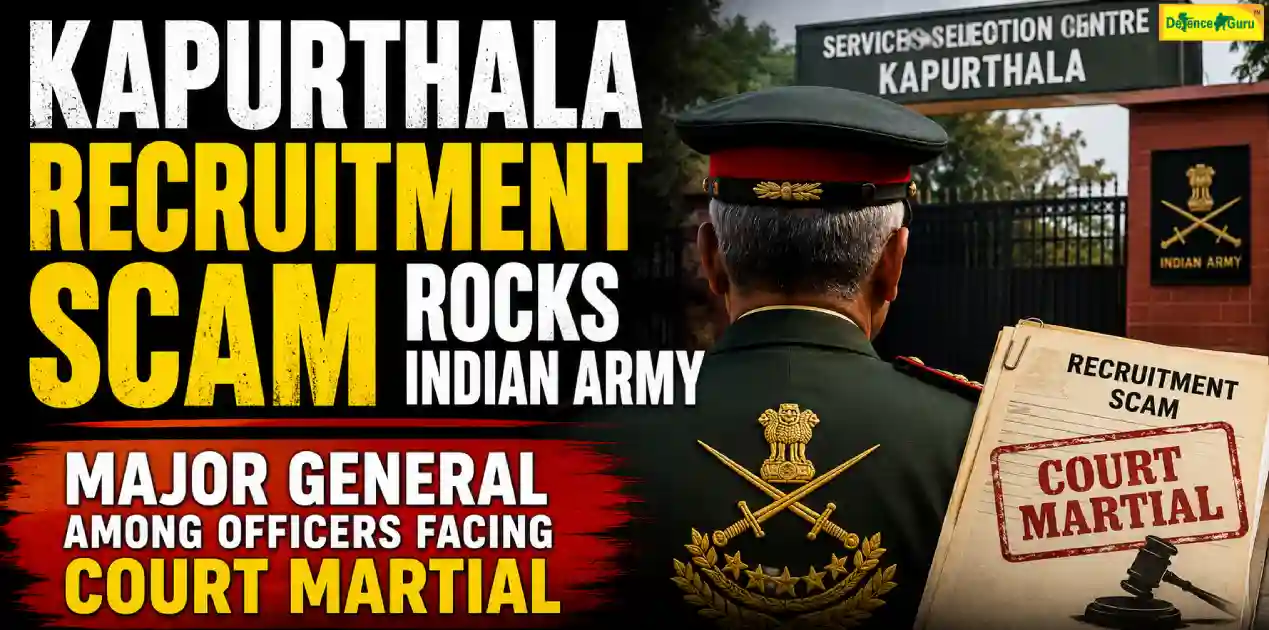
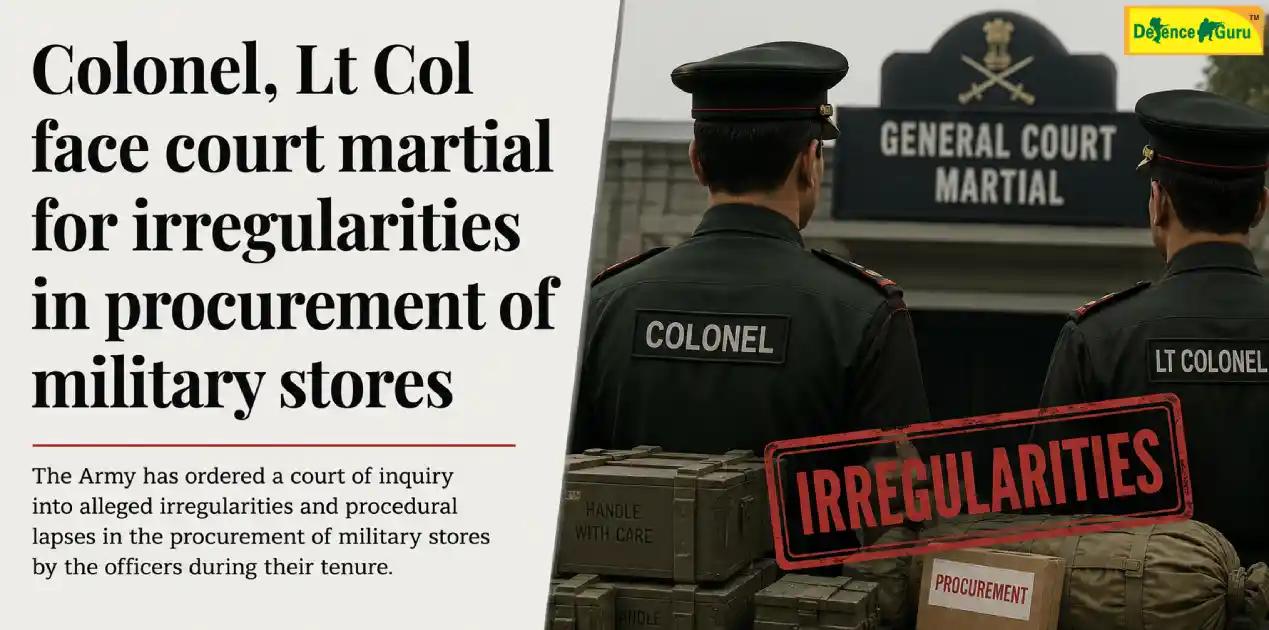
In a significant development, the Indian Army has initiated court martial proceedings against two senior officers, a Colonel and a Lieutenant Colonel, over alleged irregularities worth more than ₹2 crore in the procurement of military stores while they were posted with an Electronics and Mechanical Engineers (EME) battalion.
The case highlights the Army's continued efforts to maintain transparency, accountability, and discipline within its ranks, regardless of the rank of the personnel involved.
What Is the Case About?
The allegations relate to the purchase and management of military stores during the officers' tenure in an EME battalion. According to reports, complaints regarding procurement procedures led the Army to launch a detailed investigation.
A Court of Inquiry was subsequently ordered to examine the matter. The inquiry reportedly found evidence suggesting lapses and irregularities in the handling of military stores, leading to disciplinary action against the officers concerned.
The alleged financial irregularities are estimated to exceed ₹2 crore, making it one of the more serious procurement-related disciplinary cases in recent times.
Court Martial Proceedings Underway
The Army has ordered that the Colonel be tried through a General Court Martial (GCM), the highest form of military trial in the armed forces.
Meanwhile, the trial of the Lieutenant Colonel is already underway in Meerut.
Both officers have been attached to separate brigades under the Western Command as part of the ongoing disciplinary process.
Charges Against the Colonel
The Colonel, who was commanding the battalion at the time of the alleged irregularities, is facing a total of 12 charges.
These include:
- Five charges under the Prevention of Corruption Act.
- Four charges under Section 52 of the Army Act, which deals with misappropriation of property and intent to defraud.
- Three alternative charges under Section 63 of the Army Act for acts considered prejudicial to good order and military discipline.
The number and nature of the charges indicate the seriousness with which the Army is viewing the matter.
Charges Against the Lieutenant Colonel
The Lieutenant Colonel faces four charges under Sections 52 and 63 of the Army Act.
While the exact details of each allegation have not been made public, the charges broadly relate to misconduct connected with military property and actions that may have affected discipline and proper functioning within the unit.
How the Investigation Unfolded
Interestingly, the case initially began with allegations against a Major.
A Court of Inquiry headed by an Artillery Brigade Commander reportedly found the Major culpable of several acts of omission and commission. During the course of the investigation, the alleged involvement of the Colonel and Lieutenant Colonel also surfaced.
As more details emerged, the Army expanded its disciplinary action and moved to initiate proceedings against the senior officers as well.
Colonel's Legal Challenge
The Colonel challenged the proceedings before the Armed Forces Tribunal (AFT).
At the time, he was attending the prestigious Higher Command Course at the Army War College in Mhow. The Tribunal allowed him to complete the course since it was nearing completion before he was attached for disciplinary proceedings.
The officer also argued that he had previously been awarded a punishment of "reproof" and that fresh proceedings would amount to double jeopardy.
However, the Army maintained that the earlier punishment had been revoked and that the competent authority was empowered to initiate fresh disciplinary action under the applicable rules.
Delhi High Court's Stand
The matter also reached the Delhi High Court, where the Colonel sought a stay on the proceedings.
However, in October 2025, a Division Bench of the High Court declined to halt the disciplinary process. The court made it clear that the Army should continue the proceedings and complete them without unnecessary delay.
This effectively cleared the way for the ongoing court-martial process.
Why This Case Matters
Military procurement involves public funds and directly impacts operational readiness. Any irregularity in the acquisition of equipment or stores is treated seriously because it can affect both financial accountability and military efficiency.
The case also sends a strong message that disciplinary standards apply across all ranks. Whether an officer is a junior leader or a senior commander, allegations of corruption, misappropriation, or misconduct are subject to scrutiny and legal examination under military law.
Conclusion
As the court-martial proceedings move forward, the final outcome will be closely watched within military circles. The case serves as a reminder that accountability remains a key pillar of the armed forces.
For now, the allegations are still under judicial examination through the military justice system, and the findings of the court-martial will ultimately determine the responsibility of the officers involved.
The development underscores the Army's emphasis on discipline, integrity, and transparency values that remain central to maintaining trust in one of the country's most respected institutions.
Read more:
Admiral Krishna Swaminathan Takes Charge as India’s New Navy Chief
Kapurthala Recruitment Scam Rocks Indian Army: Major General Among Officers Facing Court Martial