Indian Army Introduces Sweeping Changes to Uniforms, Grooming Standards and Military Traditions
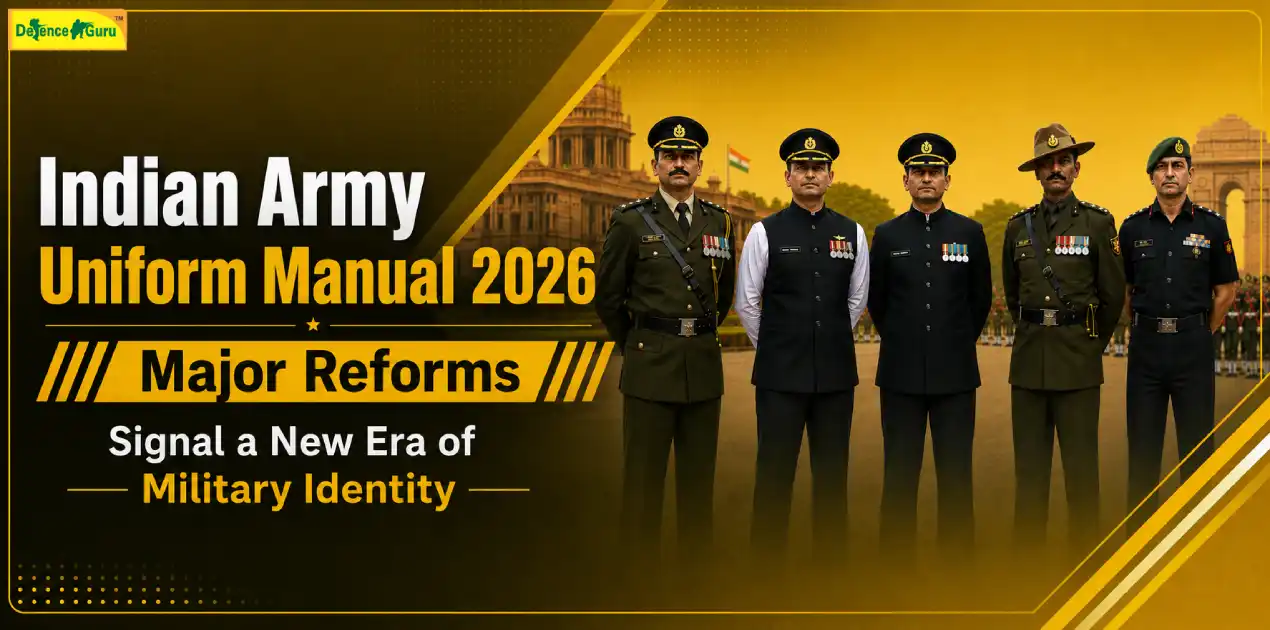
The Indian Army is set to witness one of its most significant cultural and administrative transformations in recent years. Through the newly released Army Uniform Manual 2026, the force has introduced a range of reforms affecting uniforms, ceremonial practices, grooming standards, and military traditions.
These changes are not merely about appearance. They represent the Army's broader effort to align its identity with modern India while gradually moving away from customs inherited from the colonial era.
From the introduction of the traditional Bandi Jacket to the removal of certain ceremonial practices, the new regulations reflect an evolving military culture that balances professionalism, tradition, and national identity.
Why Has the Army Updated Its Uniform Regulations?
The Army Uniform Manual has been revised after nearly eight years. The updated 174-page document outlines detailed regulations governing dress codes, ceremonial attire, personal appearance, and official military customs.
According to military officials, the objective is to ensure that Army traditions continue to evolve in line with India's sovereign identity while maintaining the discipline and professionalism expected from one of the world's largest armed forces.
The reforms are part of a larger initiative to modernise the armed forces and reduce the influence of colonial-era customs that no longer reflect contemporary India.
Bandi Jacket Added to Official Formal Dress
One of the most talked-about changes is the inclusion of the Bandi Jacket in the Army's approved formal attire.
For the first time, Army officers will be allowed to wear this traditional Indian closed-neck jacket during designated formal occasions. The move is widely viewed as an effort to incorporate Indian cultural elements into military protocol.
Under the new guidelines, the Bandi Jacket must be:
- Worn over a full-sleeved formal shirt
- Matched with formal trousers of the same colour
- Paired with closed formal shoes
- Maintained in sober and professional shades
The decision marks a significant step toward giving greater prominence to indigenous styles within military traditions.
New Battle Jacket to Replace Existing Winter Dress
The Army has also announced changes to its winter working uniform.
A newly introduced Battle Jacket will gradually replace the existing jersey-based winter outfit known as Dress 3A. The transition has already started and is expected to be fully implemented by June 2029.
The revised winter dress combination will include:
- Angola Shirt
- Battle Jacket
- Beret
Officials believe the Battle Jacket will improve comfort, practicality, and consistency across different formations and ranks.
Revised Rules for Ceremonial Sword Carriage
Another major reform concerns the use of ceremonial swords during military parades.
Traditionally, senior officers reviewing ceremonial parades carried swords as part of military protocol. Under the new regulations, reviewing officers will no longer carry swords during parade inspections.
Instead, swords will be restricted to:
- Parade Commanders
- Contingent Commanders
- Specifically designated ceremonial personnel
The revised rule will apply to important military events such as Republic Day, Independence Day, Army Day celebrations, and Guards of Honour.
The change reflects the Army's effort to modernise ceremonial procedures while preserving their symbolic significance.
Pouch Belts Removed from Formal Mess Dress
The new manual has also eliminated pouch belts from certain ceremonial dress categories.
Army personnel will no longer wear pouch belts with:
- Mess Dress No. 5
- Mess Dress No. 6
These uniforms are commonly used during formal military dinners, receptions, and official gatherings.
While the general requirement has been removed, some regiments and corps may continue to use pouch belts during specific traditional or regimental ceremonies where historical customs remain important.
Colonial-Era Terminology Being Replaced
One of the most symbolic aspects of the reforms is the gradual removal of colonial-era terminology from Army traditions and references.
Terms associated with British military heritage, including the use of words such as "Royal" in certain contexts, are being reviewed and phased out wherever applicable.
The objective is to ensure that Army customs better reflect India's independent military heritage and contemporary national identity.
Stricter Rules on Tattoos, Piercings and Accessories
The Army Uniform Manual 2026 also introduces clearer standards regarding personal appearance.
According to the updated regulations:
- Tattoos are generally prohibited.
- Body piercings are not permitted.
- Bracelets cannot be worn while in uniform.
- Religious threads may only be worn during approved religious occasions.
Traditional exemptions available to Sikh soldiers remain unchanged.
The Army believes uniform appearance is essential for maintaining discipline and a professional military image.
Updated Grooming Standards for Personnel
The revised manual provides more specific guidelines regarding hairstyles and facial hair.
Under the new standards:
- Moustaches must not exceed 12 centimetres in length.
- Hairstyles must remain neat and within prescribed military limits.
- Personnel are expected to maintain a clean and professional appearance at all times.
These measures are aimed at ensuring consistency and uniformity across the force.
Regulations on Cosmetics and Personal Items
The Army has also clarified restrictions relating to cosmetics and personal accessories while in uniform.
Generally prohibited items include:
- Lipstick
- Coloured nail polish
- Bindi
- Nose pins
However, married women may continue wearing sindoor, provided it is not visible beneath military headgear such as caps or berets.
Restrictions on Perfumes and Deodorants
One of the lesser-known but widely discussed provisions concerns the use of fragrances while in uniform.
The new guidelines advise personnel against using:
- Perfumes
- Deodorants
Aftershave lotion, however, remains permissible under the regulations.
These standards are intended to maintain a consistent and professional environment during official duties.
What These Changes Mean for Defence Aspirants
For candidates preparing for NDA, CDS, AFCAT, Agniveer, MNS, and other defence examinations, the new uniform regulations offer valuable insight into the evolving culture of the Indian Armed Forces.
The reforms demonstrate that while military discipline remains at the core of Army life, there is also a growing emphasis on promoting Indian traditions, values, and national identity within military institutions.
Future officers and soldiers entering the service will become part of an Army that seeks to balance operational excellence with cultural authenticity.
Final Words
The Army Uniform Manual 2026 represents far more than a simple update to dress regulations.
With the introduction of the Bandi Jacket, the adoption of the Battle Jacket, revised ceremonial practices, stricter grooming standards, and the gradual removal of colonial influences, the Indian Army is embracing a modern identity rooted firmly in Indian values.
As these reforms are implemented over the coming years, they are expected to shape not only how the Army looks but also how it expresses its traditions, heritage, and vision for the future.
Frequently Asked Questions (FAQs)
1. What is the Army Uniform Manual 2026?
The Army Uniform Manual 2026 is the latest set of guidelines issued by the Indian Army, governing uniforms, grooming standards, ceremonial practices, and formal dress regulations for Army personnel. It replaces several older provisions and introduces reforms aimed at modernising the force while strengthening Indian cultural identity.
2. What is the biggest change introduced in the Army Uniform Manual 2026?
One of the most significant changes is the inclusion of the traditional Indian Bandi Jacket in the formal civil dress for Army officers. The Army has also introduced the Battle Jacket as the new winter outerwear and revised several ceremonial traditions.
3. What is the new Battle Jacket in the Indian Army?
The Battle Jacket is the Army's newly introduced winter outerwear that will gradually replace the existing jersey-based winter uniform (Dress 3A). The transition is expected to be completed by June 2029.
4. Can Army officers now wear Bandi Jackets during official events?
Yes. Under the new rules, Army officers can wear a Bandi Jacket during approved formal occasions. The jacket must be paired with a full-sleeved shirt, matching formal trousers, and closed formal footwear.
5. Has the Indian Army banned tattoos?
The new manual reiterates strict regulations regarding tattoos. Personnel are expected to comply with Army policies concerning tattoos and body modifications to maintain a disciplined and professional appearance.
Read more:
Lt General Dhiraj Seth Will Be India’s Next Chief Of Army Staff
Meet the First-Ever 8 Women Cadets Graduating from IMA Dehradun