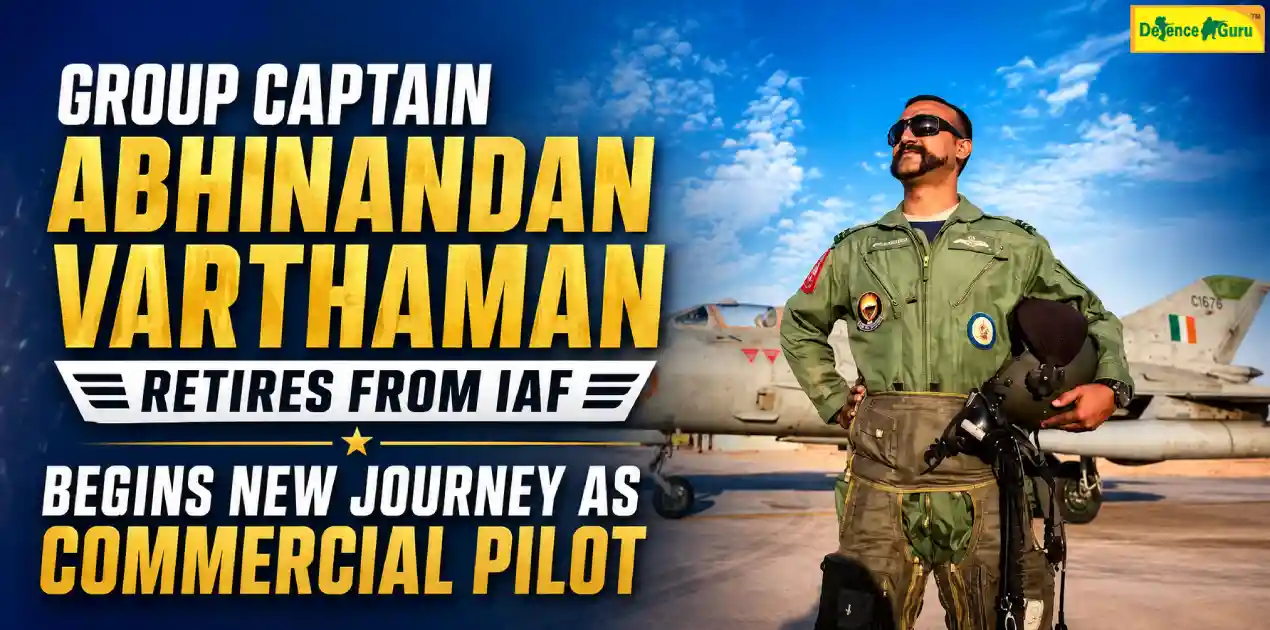
Group Captain Abhinandan Varthaman, one of the most renowned fighter pilots of the Indian Air Force (IAF), has embarked on a new journey as a commercial pilot in the civil aviation sector. The distinguished officer,r who served the IAF for close to 22 years, has now joined Goa-based regional airline FLY91 as a pilot after retiring from the IAF.
For defence aspirants, Abhinandan Varthaman's journey is not just the career of a fighter pilot; it's a lesson in bravery, discipline, commitment, and, most importantly, calmness under pressure. His journey is inspirational for all defence aspirants. Moreover, all these sacrifices became another add-on.
2019 Aerial Engagement
Abhinandan Varthaman became a household name after the aerial engagement between Indian and Pakistani fighter jets on 27 February 2019, which was a day after the Indian Air Force's Balakot air operation.
It was the role of the then Wing Commander Abhinandan Varthaman as he served with a MiG-21 Bison squadron. He was tasked with responding to the engagement when Pakistani fighter aircraft crossed the Line of Control on 27 February, and Indian fighter aircraft were to respond. The encounter saw Varthaman's MiG-21 Bison engaging the Pakistani F-16, and he became one of the most talked-about personalities in India's recent military history.
Furthermore, his MiG-21 was hit, resulting in his ejection over Pakistani territory, where he was detained. He was released on 1 March 2019 after spending around three days in Pakistan.
This incident marked the risks fighter pilots take in such engagements and the challenges they face in hostile conditions.
Vir Chakra Award
Wing Commander Abhinandan Varthaman was awarded the Vir Chakra, one of India's wartime gallantry awards, for his display of bravery during the aerial engagement.
This award was announced on Independence Day in 2019, and he was presented with the Vir Chakra by President Ram Nath Kovind in November 2021. By then, he was promoted to the rank of Group Captain.
The citation for the award mentioned his exceptional air-to-air combat skills and his ability to identify and engage the threat despite the circumstances. The Vir Chakra, which is third in line for India's wartime gallantry awards, comes after the Param Vir Chakra and Maha Vir Chakra.
For defence aspirants, this award is a reminder that military service comes with a lot of challenges and the need to display courage, quick decision-making, and a strong sense of duty.
From NDA To Indian Air Force
Abhinandan Varthaman's journey began long before the 2019 incident, as he was a cadet of the National Defence Academy (NDA) and was part of the 104th NDA course. He was commissioned into the Indian Air Force on 19 June 2004.
Further, he was able to carve a niche for himself as a fighter pilot, gained experience in military aviation, and eventually moved up the ranks to become Wing Commander in 2017 and later Group Captain in 2021.
Abhinandan Varthaman's journey from an NDA cadet to an experienced fighter pilot and senior IAF officer is a testament to the long road that one takes to build a career in the armed forces.
For NDA aspirants, this is an important takeaway as the NDA lays the foundation of military training and academic knowledge and prepares young candidates to take on their roles as future officers of the Indian Armed Forces.
From Fighter Pilot To Commercial Pilot
Group Captain Abhinandan Varthaman has taken premature retirement, as he has joined FLY91 in Goa as a commercial pilot after nearly 22 years of service. This, in turn, marks a new chapter in his aviation career as he leaves behind the fighter aviation world for the civil aviation sector.
There is no doubt that such a transition is possible for experienced combat aviators; however, the transition needs to meet the requirements of India's civil aviation regulator, the Directorate General of Civil Aviation (DGCA). It will require him to complete the necessary licensing, medical, and training requirements.
For Abhinandan, it's not just a change of profession; it's an opportunity to utilise the knowledge, discipline, and experience that he has in the aviation field.
What Can Defence Aspirants Learn From Abhinandan Varthaman's Career?
Abhinandan Varthaman's journey offers numerous lessons to students appearing for defence examinations like NDA, CDS, AFCAT, etc.
1. Stay calm under pressure:
Military aviation requires pilots to make quick decisions under pressure. Staying calm and focused is an important quality that every defence aspirant must possess.
2. Discipline matters:
A successful military career is built on many years of discipline, training, physical fitness, and learning. All this is important, as the role of an officer entails a lot of responsibilities.
3. Courage is more than fearlessness:
Courage means doing what one's duty demands under circumstances where the situation is unclear. This quality is particularly important for a military officer.
4. Keep learning and adapting:
Abhinandan's transition from fighter aviation to commercial aviation shows that it's important to adapt to new circumstances and learn new skills.
5. Develop Leadership qualities
An officer must possess certain leadership qualities to take on their roles and responsibilities. This is also assessed during the SSB interview.
6. Build resilience:
A career in the armed forces can be taxing and requires one to stay resilient in the face of challenges and setbacks. This is an important quality that every defence aspirant must acquire.
Conclusion
Group Captain Abhinandan Varthaman's journey from an NDA cadet to an IAF fighter pilot, Vir Chakra awardee, and senior officer has been quite an extraordinary one. His latest move to the civil aviation sector marks the beginning of yet another chapter in his career.
For defence aspirants, his journey is a reminder that a successful military career is built on the pillars of discipline, courage, professionalism, resilience, and continual learning. His journey can inspire young defence aspirants to not only take up a career in the armed forces but also understand the responsibilities and values that come with being an officer.
Read more:
Why Did Major Rishabh Sambyal Leave the Indian Army? Real Reason, Career & Retirement Explained