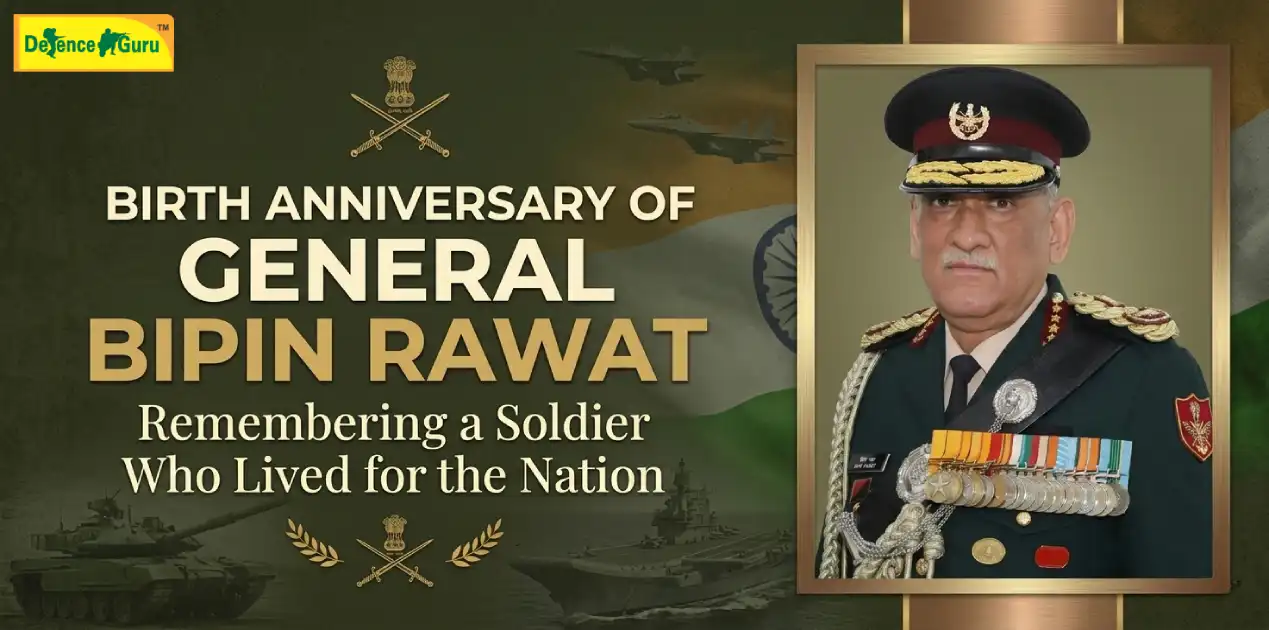
Birth Anniversary of General Bipin Rawat: Remembering a Soldier Who Lived for the Nation
The birth anniversary of General Bipin Rawat, observed on 16 March, is an important day to remember one of India’s most respected military leaders. General Rawat dedicated more than four decades of his life to serving the nation through the Indian Army. Known for his strong leadership, strategic vision, and deep sense of patriotism, he played a major role in strengthening India’s defense system. His journey from a young cadet to becoming India’s first Chief of Defence Staff (CDS) reflects discipline, courage, and commitment to national service.
On this day, people across the country pay tribute to his contributions and remember the legacy he left behind. His life story continues to inspire young Indians who dream of serving the nation in uniform.
Early Life and Family Background
General Bipin Rawat was born on 16 March 1958 in Pauri Garhwal, Uttarakhand, a region known for producing many brave soldiers for the Indian armed forces. He came from a family with a strong military tradition. His father, Lieutenant General Lakshman Singh Rawat, served as the Deputy Chief of Army Staff in the Indian Army. Growing up in such an environment, Rawat was deeply influenced by the values of discipline, courage, and dedication to the country.
Being part of a military family meant that he was exposed to the lifestyle and responsibilities of soldiers from an early age. Stories of bravery and service to the nation were common in his household. These experiences shaped his mindset and inspired him to follow in his father’s footsteps.
His upbringing instilled in him a sense of duty and pride toward serving the country. From a young age, he knew that he wanted to join the armed forces and contribute to the nation’s security.
Education and Military Training
General Rawat completed his early education at Cambrian Hall School in Dehradun and later attended St. Edward’s School in Shimla. During his school years, he was known for his disciplined nature and leadership qualities. His determination to pursue a military career led him to the prestigious National Defence Academy (NDA) in Khadakwasla.
The NDA is one of the most respected military training institutions in the world, where cadets undergo rigorous physical and academic training. Rawat’s time at the academy helped shape his leadership skills and prepared him for the challenges of military life.
After completing his training at NDA, he joined the Indian Military Academy (IMA) in Dehradun. At the academy, he performed exceptionally well and was awarded the Sword of Honour, one of the highest achievements for a cadet. This award is given to the cadet who shows the best overall performance in training, leadership, and discipline.
This recognition highlighted his dedication and potential as a future leader in the Indian Army.
Beginning of His Military Career
In December 1978, Bipin Rawat was commissioned into the 5th Battalion of the 11 Gorkha Rifles, a regiment famous for its bravery and long history of military excellence. The Gorkha soldiers are respected worldwide for their courage and loyalty, and serving with them is considered a great honor.
As a young officer, Rawat quickly gained the trust and respect of the soldiers under his command. He believed strongly in leading from the front, a quality that helped him build strong relationships with his troops. Military life in operational areas is challenging, and officers must be able to guide their soldiers through difficult situations. Rawat demonstrated these leadership qualities early in his career.
His initial postings were in some of the toughest terrains, where he gained valuable field experience. These early years helped him understand the realities of military operations and prepared him for greater responsibilities in the future.
Role in Counterinsurgency Operations
During his career, General Rawat served in several sensitive regions of India, including Jammu and Kashmir and the Northeastern states, where the army conducts counterinsurgency operations. These operations require careful planning, intelligence gathering, and cooperation with local authorities.
Rawat believed that effective counterinsurgency operations require both strength and strategic thinking. Instead of relying only on military force, he emphasized the importance of accurate intelligence and coordination with local communities.
His leadership in these regions helped improve operational effectiveness and strengthen security in areas affected by insurgency. Working in such environments also gave him valuable experience in handling complex security challenges.
These experiences played an important role in shaping his understanding of modern warfare and national security.
Rise to Senior Leadership Positions
Over the years, General Rawat held several important command positions in the Indian Army. He commanded a brigade in the Uri sector of Jammu and Kashmir, a region that frequently faces infiltration attempts along the Line of Control.
Later, he commanded the 19th Infantry Division and served as the General Officer Commanding (GOC) of III Corps in Dimapur, which is responsible for military operations in the Northeast. These roles involved managing large numbers of troops and ensuring operational readiness in sensitive areas.
Rawat was known for his calm and decisive leadership style. He believed that a good commander should remain connected with soldiers and understand the challenges they face in the field.
His experience and leadership abilities eventually led to his appointment as the Chief of Army Staff in 2016, one of the highest positions in the Indian Army.
India’s First Chief of Defence Staff
A historic moment in India’s defense system came in December 2019, when the government created the post of Chief of Defence Staff (CDS) to improve coordination among the Army, Navy, and Air Force. General Bipin Rawat was appointed as the first CDS of India.
The purpose of this position was to promote jointness among the three armed forces and improve strategic planning. Rawat strongly believed that modern warfare requires integrated operations involving multiple branches of the military.
He worked on proposals to create theatre commands, where forces from different services would operate under a unified command. This system aims to improve coordination and enable faster decision-making during military operations.
His vision for military reform and modernization played a significant role in shaping the future of India’s defense structure.
Awards and Honors
Throughout his long and distinguished career, General Bipin Rawat received several prestigious awards for his service to the nation. These included the Param Vishisht Seva Medal (PVSM), Uttam Yudh Seva Medal (UYSM), Ati Vishisht Seva Medal (AVSM), Yudh Seva Medal (YSM), and Sena Medal (SM).
These honors recognized his leadership, dedication, and outstanding contributions to the Indian armed forces. Military decorations are awarded only after years of exceptional service, and Rawat’s achievements reflected his commitment to the country.
Legacy and Remembrance
General Bipin Rawat’s life came to a tragic end on 8 December 2021, when a helicopter carrying him and several other armed forces personnel crashed near Coonoor in Tamil Nadu. The incident shocked the nation and led to widespread tributes.
Despite his untimely passing, his legacy continues to influence India’s defense system. The reforms he initiated, especially those related to joint military operations and theatre commands, remain important for the future of the armed forces.
On his birth anniversary, people remember him not only as a military leader but also as a symbol of dedication, courage, and patriotism. His journey from a young cadet to the highest levels of military leadership serves as an inspiration for future generations.
General Bipin Rawat will always be remembered as a soldier who devoted his life to protecting the nation and strengthening India’s defense capabilities.
Read more:
Lt Gen Dhiraj Seth to Become Vice Chief of the Army Staff from April 1, 2026
TA Officer Lt Col Pradeep Shoury Arya Awarded Sena Medal (Gallantry) for Narco-Terror Operations