Cleared NDA 2 2026? Here's How to Prepare for Your SSB Interview
Qualifying for the NDA 2 2026 written examination is an important achievement for anyone dreaming of joining the Indian Armed Forces. With the result declared on 10 October 2026, successful candidates should now turn their attention towards the next stage: the Services Selection Board (SSB) interview.
For many aspirants, this stage brings a new set of questions. How does SSB work? What should you practise first? How can you prepare for psychological tests, group activities and personal interviews?
Unlike a written examination, SSB evaluates several aspects of a candidate's personality, including reasoning, communication, teamwork and decision-making. This means your preparation needs to go beyond books and mock tests.
Let's look at the next steps after the NDA 2 2026 result and explore a practical way to prepare for the upcoming assessment.
Your First Steps After Qualifying for NDA 2 2026
Before beginning intensive preparation, complete the necessary formalities and understand the official instructions.
Check Your Roll Number and Complete Registration
Visit the official UPSC website to check your result and save a copy of the relevant notification.
Follow the registration instructions mentioned in the official notice. Candidates who have not already registered should complete the required registration through the Indian Army recruitment website within the prescribed period.
Keep checking your registered email ID for selection centre and interview date information. Also, organise your educational certificates, proof of date of birth, identification, and other documents specified by the authorities.
Don't Wait for the Interview Date to Start Preparing
Many candidates delay SSB preparation until they receive their interview dates. This can leave them with limited time to understand the assessment process.
Start by learning about the different tests, reviewing your personal profile, and identifying the areas where you need improvement. Even a consistent daily routine can help you become more comfortable with the assessment formats.
A Closer Look at the Five-Day SSB Assessment
The SSB process generally spans five days, although reporting arrangements and the exact schedule may vary between selection centres.
- Day 1 – Initial Screening: Candidates appear for the Officer Intelligence Rating (OIR) test and Picture Perception and Description Test (PP&DT), which involve reasoning, story writing, narration and group discussion.
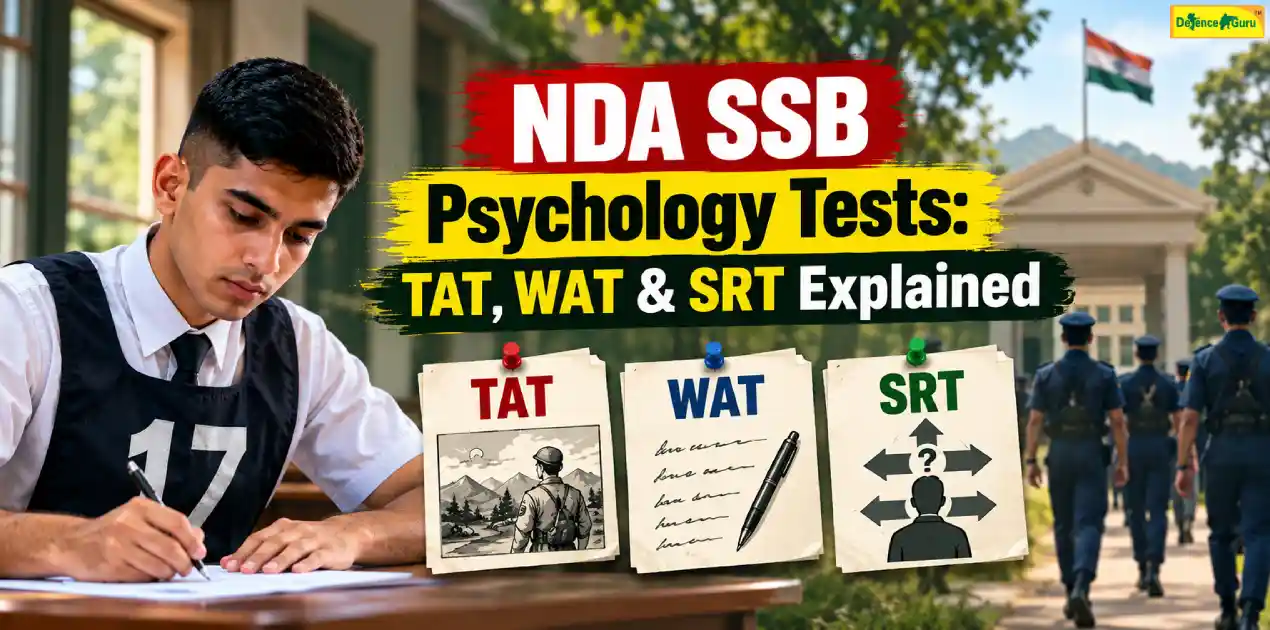
- Day 2 – Psychological Assessment: Tests generally include TAT, WAT, SRT and SDT, which explore candidates' responses, thought processes and self-awareness.
- Days 3 and 4 – Group Activities and Interview: Candidates participate in Group Testing Officer (GTO) tasks and attend personal interviews according to the selection centre's schedule.
- Day 5 – Final Conference: Assessors discuss their observations, and candidates attend the conference before the recommendation decision is communicated.
Candidates recommended by the SSB must also meet the prescribed medical standards. Final admission depends on eligibility, medical fitness, merit, and available vacancies. Clearing the written examination alone does not guarantee selection.
Practical Ways to Strengthen Your SSB Performance
Work on the Qualities Expected from an Officer
Officer-Like Qualities (OLQs) include effective reasoning, initiative, self-confidence, cooperation, communication, determination and organising ability.
You can begin developing these qualities through everyday activities. Take responsibility for a task, participate in team sports, volunteer to organise an event, or practise expressing your views in group discussions.
The objective is not to pretend to possess every quality. It is to understand your strengths and work honestly on your weaknesses.
Get Comfortable with Screening Tests
For OIR, practise verbal and non-verbal reasoning questions, number series, coding-decoding, analogy and figure-based problems.
For PP&DT, learn to observe a picture, develop a realistic story and narrate it within the allotted time. Practise group discussions with friends so that you can present your ideas clearly while listening to others.
Avoid unnecessarily complicated stories. A logical situation, sensible action, and believable outcome provide a useful foundation for practice.
Practise the Four Psychological Tests
The psychological tests can feel unfamiliar, particularly during your first SSB attempt. Regular timed practice helps you understand their formats.
- TAT: Develop logical stories based on pictures.
- WAT: Practise responding naturally to words rather than memorising prepared sentences.
- SRT: Think of practical ways to handle everyday challenges.
- SDT: Reflect honestly on your personality, strengths and areas for improvement.
Do not rely on memorised answers that promise selection. Focus on realistic responses that reflect your actual thinking and experiences.
Learn to Contribute Effectively During GTO Tasks
GTO activities assess how candidates approach problems and work with others. Practise group discussions, planning exercises, lecturette and suitable physical activities.
During a group planning exercise, focus on identifying priorities, allocating resources and developing a workable solution. For the lecturette, organise your ideas into an introduction, main points and conclusion.
Physical fitness, coordination and confidence can also help you approach outdoor activities more comfortably. However, teamwork is not about dominating every task. Listening, cooperation and constructive participation matter as well.
Prepare Your Personal Profile for the Interview
The personal interview may cover your education, family, hobbies, achievements, daily routine, friendships and motivation to join the Armed Forces.
Review your Personal Information Questionnaire (PIQ) details and practise explaining your experiences clearly. Think about your strengths, weaknesses and the challenges you have faced.
If you mention a hobby, be ready to discuss it in detail. If you don't know an answer, acknowledge it calmly rather than inventing information.
Develop Awareness and Maintain a Healthy Routine
Read reliable news sources for around 30–45 minutes daily. Focus on national and international affairs, defence developments, military exercises, geography, science and major economic developments.
Try to understand why an event matters instead of simply memorising headlines.
Alongside current affairs, maintain a regular fitness routine with suitable cardio, basic strength exercises, stretching and outdoor activities. Eat well and get adequate sleep. Consistency is more useful than starting an exhausting workout routine just before your interview.
Finding Structured SSB Guidance After the Written Result
Self-study is a useful starting point, but some candidates need additional help understanding assessment formats, practising group activities, and identifying weaknesses.
Centurion Defence Academy offers a 14-Day SSB Interview Preparation Course in Lucknow and Dehradun for candidates looking for structured preparation.
The course covers major areas of the SSB process, including screening tests, psychological assessments, GTO tasks and personal interviews. Guided practice can help candidates become familiar with the assessment formats, practise under time constraints, and work on communication and teamwork.
Before enrolling, review the course details, available facilities and schedule to ensure that the programme suits your needs and interview timeline.

Upcoming SSB Training Batches at Centurion Defence Academy
Candidates can explore the following 2026 batch schedule for the 14-Day SSB course.
Lucknow centre
- 12 October 2026
- 26 October 2026
- 10 November 2026
- 23 November 2026
Dehradun centre
- 19 October 2026
- 2 November 2026
- 16 November 2026
- 30 November 2026
- 14 December 2026
- 28 December 2026
Candidates should contact Centurion Defence Academy to confirm current seat availability, course fees, and batch details before enrolling.
Starting early gives you more time to practise, reflect on feedback, and work on the areas that need improvement.
Common Preparation Mistakes You Should Avoid
Even motivated candidates can make avoidable mistakes during SSB preparation.
- Leaving preparation until the last minute: Start as soon as you qualify in the written examination.
- Memorising supposedly perfect answers: Practise natural and realistic responses.
- Ignoring current affairs: Build a daily reading habit.
- Dominating group discussions: Contribute relevant ideas and listen to other candidates.
- Exaggerating achievements: Be honest about your experiences and interests.
- Neglecting fitness: Maintain a sustainable exercise routine and get enough rest.
Expecting guaranteed selection through coaching: Training can provide guidance and practice, but no course can guarantee selection.
Understanding these mistakes early can help you approach your preparation more sensibly.
Final Takeaway for NDA 2 2026 Candidates
Clearing the NDA 2 2026 written examination is a significant milestone, but the next stage requires a different kind of preparation. Focus on understanding the assessment process, improving communication, practising psychological tests, developing teamwork, and staying informed about current affairs.
Start early, remain consistent, and learn from your mistakes. If you prefer structured guidance, explore Centurion Defence Academy's 14-Day SSB Interview Preparation Course in Lucknow or Dehradun and select a batch that fits your preparation needs.
Remember, SSB preparation is not about memorising answers or pretending to be someone else. It is about understanding yourself, developing useful habits and preparing for the responsibilities of an officer in the Indian Armed Forces.
Frequently Asked Questions
1. What should I do after qualifying for the NDA 2 2026 written exam?
After qualifying for the NDA 2 2026 written exam, check the official instructions for the next stage, complete the required registration or documentation, and prepare for the SSB interview. Start working on screening tests, psychological assessments, GTO tasks, and personal interview questions instead of waiting for your interview date.
2. How many days does the NDA SSB interview process take?
The SSB selection process generally takes five days. It includes screening tests on the first day, followed by psychological tests, group testing activities, and a personal interview. Candidates who clear the required stages proceed to the conference and subsequent selection formalities, as applicable.
3. How can I prepare for the NDA SSB interview at home?
You can start by practising OIR questions, picture perception, story writing, and basic reasoning exercises. Read a newspaper daily, improve your communication skills, participate in group discussions, and reflect on your strengths and areas for improvement. Regular physical activity and honest self-assessment can also help you prepare.
4. Is coaching necessary for NDA SSB interview preparation?
Coaching is not compulsory, and candidates can prepare independently with a disciplined routine. However, structured guidance can help you understand the assessment process, practise different SSB tasks, and receive feedback on your performance. Mock interviews and group-task practice can be particularly useful for identifying areas that need improvement.
5. What is the best way to prepare for SSB psychological tests?
Understand the purpose and format of TAT, WAT, SRT, and SDT. Practise expressing your thoughts clearly and naturally, and focus on realistic responses rather than memorising model answers. Your responses should reflect your actual thinking, experiences, and approach to everyday situations.